
What or Who Is Dow Jones?
Dow Jones & Company, is one of the world’s leading business and financial news companies.
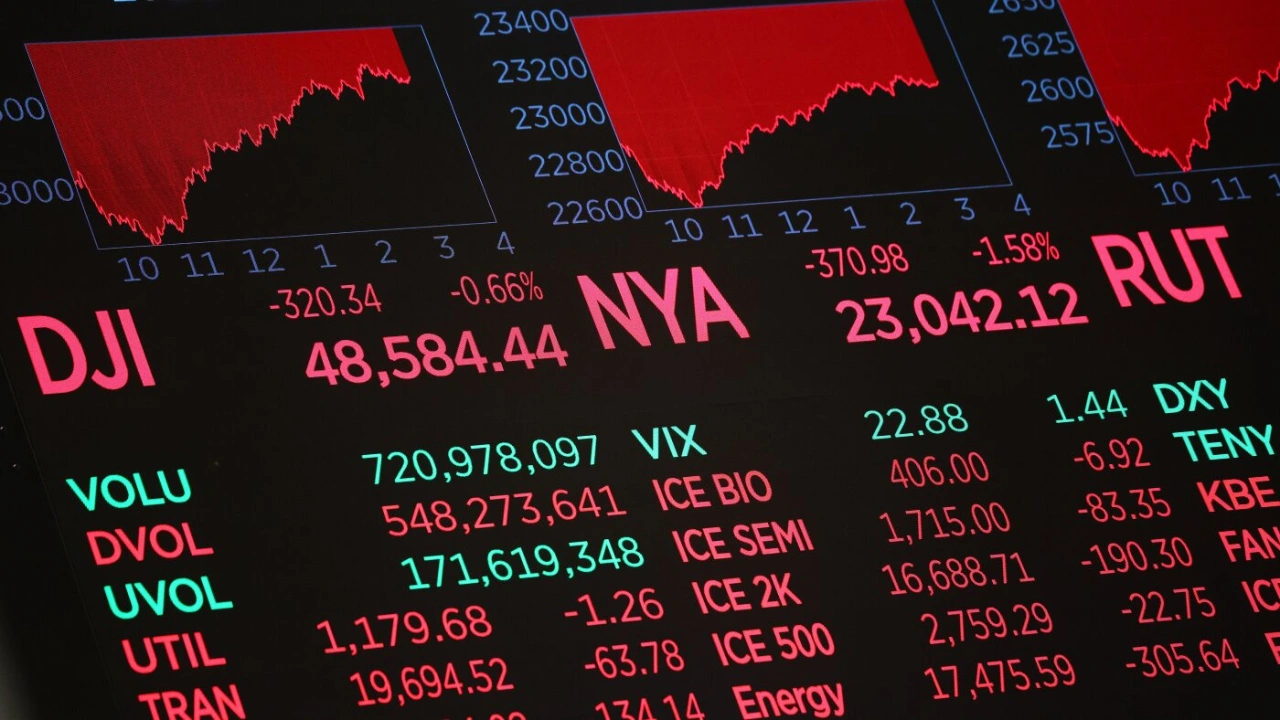
Dow Jones
When people start learning about the stock market, one term shows up again and again—Dow Jones Industrial Average. You’ll hear phrases like “Dow is up today” or “Dow crashes”, and it sounds like a single entity controlling everything.
But here’s the truth: Dow Jones is not just a number—it’s a story of how modern finance evolved, and why market sentiment matters more than most people realize.
The Origin: Not One Person, But a Vision
Many assume Dow Jones is a person. It’s not. It comes from two names—Charles Dow and Edward Jones—who, along with Charles Bergstresser, founded Dow Jones & Company in 1882.
Their goal was simple but powerful:
Make financial information understandable for the common public.
At a time when markets were confusing and opaque, they believed transparency could empower investors. That belief led to the creation of The Wall Street Journal, which still influences global finance today.
What Is Dow Jones Today? More Than Just a Company
Over time, Dow Jones became known not just as a company, but as a symbol of financial information and market tracking. Today, it operates under News Corp and runs platforms like:
- MarketWatch
- Barron’s
- The Wall Street Journal
But when most people say “Dow Jones,” they are actually referring to something else entirely—the Dow Jones Industrial Average (DJIA).
Understanding the Dow Jones Industrial Average (DJIA)
The Dow Jones Industrial Average is one of the oldest and most widely followed stock market indices in the world.
It tracks 30 major publicly traded companies in the United States, including giants like:
- Apple Inc.
- Microsoft
- Coca-Cola
- Boeing
Simple explanation:
It’s like a report card for the biggest companies in the U.S. economy.
If these companies are doing well, the Dow goes up. If they struggle, the Dow falls.
Why Only 30 Companies? (And Why That Still Works)
Here’s where things get interesting.
In a world with thousands of stocks, why track just 30?
Because these 30 companies are carefully chosen to represent different sectors—technology, healthcare, finance, consumer goods, and more.
This makes the Dow less about quantity and more about quality and representation.
Strong opinion:
Many beginners underestimate the Dow because of its small size. But that’s exactly its strength—it focuses on influential companies that shape the economy, not just random listings.
Also read: What is Mutual Funds
How the Dow Actually Works (Without Overcomplication)
Unlike many modern indices, the Dow is price-weighted.
What does that mean?
Stocks with higher prices have more influence on the index.
For example:
- If a high-priced stock like UnitedHealth Group moves, it impacts the Dow more than a lower-priced stock.
Why this matters:
The Dow reflects not just performance, but also market perception of value.
Why the Dow Still Matters in 2026
Some critics say the Dow is outdated. They argue that indices like the S&P 500 or Nasdaq are more comprehensive.
That’s partially true—but it misses a bigger point.
The Dow is not just about data—it’s about sentiment.
When headlines say:
- “Dow jumps 500 points”
- “Dow crashes”
They influence:
- Investor confidence
- Global markets
- Even policy decisions
Reality check:
Markets don’t run only on numbers—they run on emotions. And the Dow captures that emotion better than most indices.
Dow Jones vs. Reality: What Investors Should Understand
Here’s where many people go wrong:
They assume:
“Dow is up, so everything is fine.”
But that’s not always true.
- The Dow tracks only 30 companies
- It doesn’t include many mid-size or emerging businesses
- It can rise even when parts of the economy struggle
Important insight:
Use the Dow as a signal, not the full picture.
A Quick Look at Key Companies in the Dow
Some of the most influential companies in the Dow include:
- Apple Inc. – Innovation and consumer tech
- Microsoft – Software and cloud dominance
- Visa – Global payments
- Walmart – Consumer spending trends
- Goldman Sachs – Financial sector health
Together, they act like a snapshot of the modern economy.
Why This Topic Matters More Than You Think
Let’s be honest—many people ignore financial indices because they seem complicated or irrelevant.
But here’s the truth:
The Dow affects your life even if you don’t invest.
- It influences job markets
- It impacts business confidence
- It affects global economic decisions
Strong opinion:
Ignoring financial basics like the Dow is like driving without understanding the dashboard. You might move forward, but you won’t know what’s going wrong until it’s too late.
A Simple Way to Use the Dow in Your Life
You don’t need to be a stock market expert. Just:
- Track whether the Dow is generally rising or falling
- Combine it with news and economic trends
- Use it as a signal, not a decision-maker
Think of it as a weather forecast for the economy.
As per Rishi Gupta: It’s Not Just a Number
Dow Jones Industrial Average is more than an index—it’s a reflection of how economies move, how investors think, and how confidence shapes the world.
It started as a simple idea—to make financial information accessible. And even today, it continues to do exactly that.
The real question is not whether the Dow matters.
The real question is whether you’re paying attention to what it’s trying to tell you.