Top 5 must-read novels written by Indian authors
There are top 5 novel written Indian author which you must read.
Top 5 must-read novels written by Indian authors
5 novels written by Indian authors: India’s literary landscape is as vast and layered as its culture. From stories rooted in small-town simplicity to narratives that capture the chaos of history, Indian authors have produced some of the most powerful works in global literature. These books are not just stories—they are experiences that stay with you long after you turn the last page.
If you’re looking to explore Indian writing beyond the basics, here are five novels that offer depth, emotion, and timeless relevance.
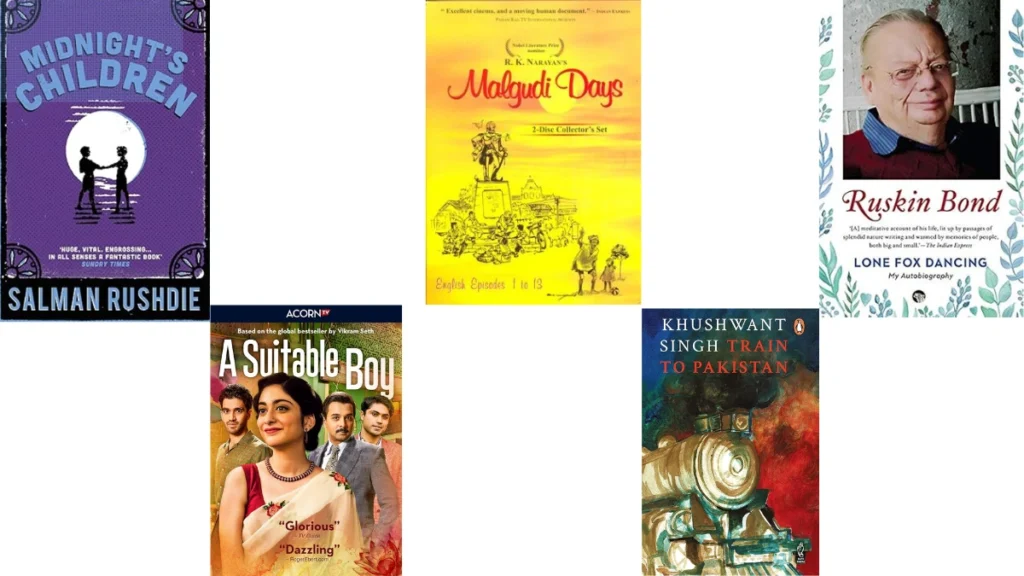
Midnight’s children
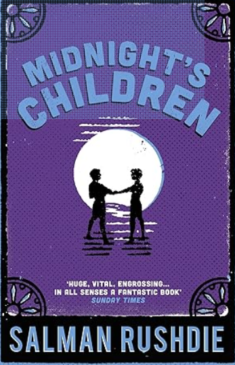
Rushdie, identified as a master storyteller published this novel in 1981. Saleem Sinai was born at the exact moment when India became an independent country. He is born with telepathic powers, as well as an enormous and constantly dripping nose with an extremely sensitive sense of smell. Through this novel, Rushdie reflects on the transitions of India from British colonial rule to independence and partition. It looks at the society, culture, religion, politics and language through the era. Midnight’s children won both the Booker Prize and James Tait Black Memorial Prize in 1981.
But this is far from a simple coming-of-age tale. Saleem discovers he has telepathic powers and a mysterious connection with other children born at the same historic moment. Through his life, Rushdie weaves together personal memory and national history, exploring themes like identity, colonialism, and the chaos of Partition.
What makes this novel stand out is its narrative style—rich, magical, and deeply symbolic. It doesn’t just describe India’s past; it feels like India—complex, noisy, emotional, and unpredictable. Winning the Booker Prize and later the “Booker of Bookers,” this novel is essential for anyone who wants to understand how storytelling can shape history.
A Suitable Boy
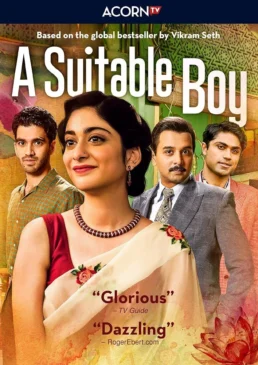
This novel is written by Vikram Seth and was published in 1993. Lata attends the marriage of her elder sister with university lecturer Pran Kumar when her mother resolves that Lata too must get married. Vikram Seth created something extraordinary with A Suitable Boy. Published in 1993, it remains one of the longest novels ever written in English—and yet, it never feels unnecessary.
Set in post-independence India, the novel revolves around Lata Mehra, a young woman whose mother is determined to find her the “perfect” husband. What follows is not just a love story but a sweeping narrative that touches politics, religion, caste dynamics, and the evolving social fabric of India.
What truly elevates this novel is its realism. Seth doesn’t rush the story; he allows you to live inside it. The characters feel like people you know, and their struggles mirror real-life dilemmas—duty versus desire, tradition versus freedom.
It’s the kind of book that requires patience, but rewards you with a deep emotional connection and a better understanding of India in the 1950s.
Also read: Top 10 Female Spanish Painters Who Redefined the Art World
Malgudi Days
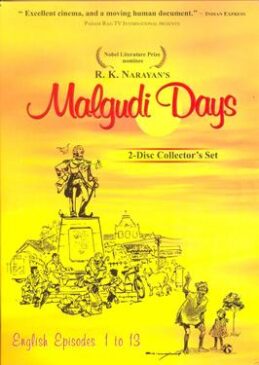
This novel written by R. K. Narayan was published in 1943. In this novel, you will get to read 32 different short stories from the fictional town Malgudi in South India. Each of the stories portrays a facet of life in Malgudi. Some of the stories were later adapted to a Doordarshan teleshow of the same name.
Few writers have captured everyday Indian life as beautifully as R. K. Narayan. First published in 1943, Malgudi Days is a collection of short stories set in the fictional town of Malgudi.
Each story introduces you to a new character—a shopkeeper, a schoolboy, a talkative man—and offers a glimpse into their lives. There’s no grand drama or heavy plot twists, yet every story leaves an impact.
Narayan’s writing is simple, but never shallow. He finds meaning in ordinary moments and reminds readers that life doesn’t need to be extraordinary to be meaningful.
The charm of Malgudi Days lies in its universality. Whether you grew up in a village or a city, you’ll find something familiar in these stories. It’s also worth noting that the book was adapted into a popular TV series, making its characters even more iconic.
Train to Pakistan
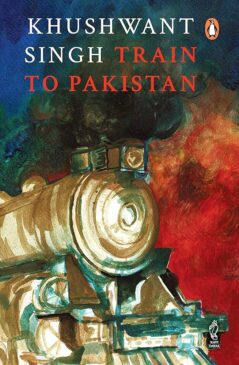
This novel is written by Khushwant Singh and it was published in 1956. This novel recounts the Partition of India in 1947 through the perspective of Mano Majra, a fictional border village. It talks about the mental trauma faced by the people, their suffering, their fear and the haters between two different communities.
Published in 1956, the novel is set in Mano Majra, a fictional village near the India-Pakistan border. Unlike many historical accounts that focus on politics, this book tells the story from the perspective of ordinary villagers whose lives are shattered by sudden violence.
The strength of this novel lies in its honesty. Singh doesn’t romanticize anything. He shows the fear, confusion, and emotional trauma that people experienced during one of the darkest periods in Indian history.
What makes it even more powerful is its focus on humanity. In the middle of hatred and division, the story highlights moments of compassion and sacrifice. It reminds readers that even in the worst times, people are capable of kindness.
Lone fox dancing
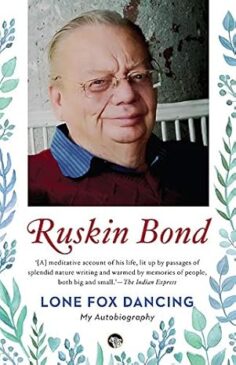
This novel is written by Ruskin Bond and it was published in 2017. This is the autobiography of one of India’s most loved writers who tried to show us the special aspect of even the most mundane things. This book takes us through the roots of everything he has written. Like his works, his autobiography is honest and engaging.
Bond is known for his gentle storytelling, and this book reflects the same warmth and honesty. He shares stories from his childhood, his struggles, and his journey as a writer—without any exaggeration or drama.
What stands out here is the simplicity. Bond doesn’t try to impress; he simply tells his truth. And in doing so, he creates something incredibly relatable and inspiring.
For readers who enjoy introspective writing, this book offers a rare glimpse into the mind of a storyteller who found magic in everyday life.
These five books are not just classics—they are mirrors of Indian society across different time periods. Whether it’s the chaos of independence, the quiet beauty of small towns, or the emotional scars of Partition, each novel adds a unique perspective.
They also highlight the diversity of Indian writing. There’s no single way to tell a story, and these authors prove that—from magical realism to grounded realism, from epic narratives to short stories.
If you’re new to Indian literature, this list is a great starting point. And if you’ve already read a few of these, revisiting them at different stages of life often brings new insights.