AI vs AI Agents Explained: Key Differences & Future Impact
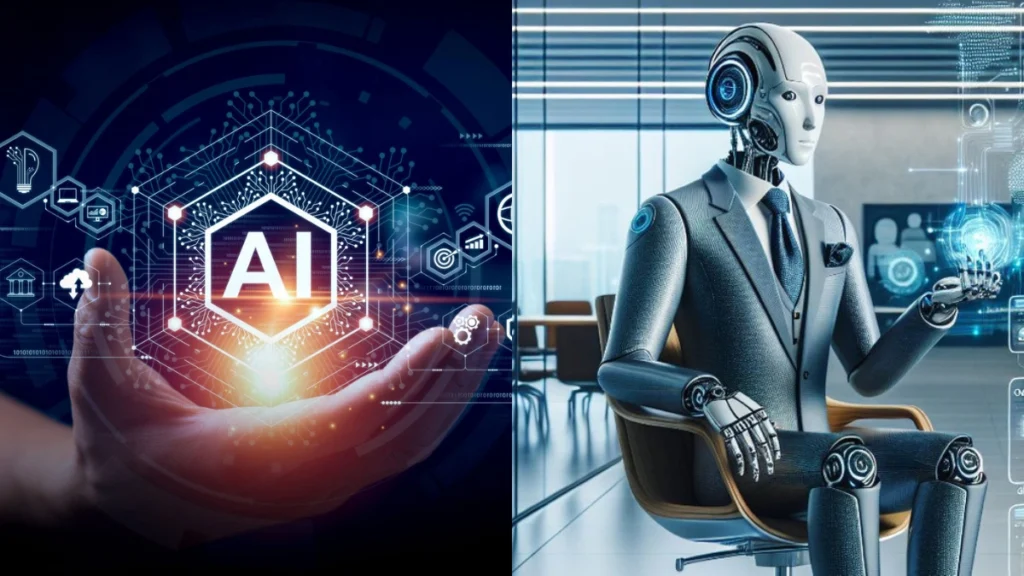
AI vs AI Agents
AI vs AI Agents: Technology is moving fast, but not always in ways that are easy to understand. Two terms you’ve probably heard a lot recently are Artificial Intelligence and AI agents. At first glance, they sound like the same thing. Many people even use them interchangeably.
But here’s the truth: they are not the same—and understanding the difference can actually give you a real advantage, whether you’re a student, business owner, or just someone trying to keep up with the future.
Let’s break it down in a simple, practical, and useful way.
What Is AI, Really?
Artificial Intelligence (AI) refers to systems that can process information, learn patterns, and generate responses. Think of AI as a highly trained brain that can answer questions, suggest ideas, or analyze data.
You already use AI every day without thinking about it:
- Google suggesting search results
- Netflix recommending shows
- Chatbots answering customer queries
- Voice assistants responding to commands
AI is powerful because it can process massive amounts of data quickly and give useful outputs.
But here’s the limitation:
AI doesn’t do things on its own.
It responds when you ask. It depends on your input.
For example, if you ask AI:
“How do I plan a vacation?”
It will:
- Suggest destinations
- Recommend hotels
- Share travel tips
But after that? You still have to:
- Book tickets
- Compare prices
- Create an itinerary
AI gives you knowledge—but not execution.
What Are AI Agents?
AI agents are where things start to get interesting—and far more powerful.
An AI agent is not just designed to think. It is designed to complete tasks.
Instead of waiting for instructions step-by-step, an AI agent can:
- Understand a goal
- Break it into steps
- Take action
- Adjust decisions along the way
Let’s use the same vacation example.
Instead of just giving advice, an AI agent could:
- Search flights based on your budget
- Compare hotels automatically
- Book tickets
- Add events to your calendar
- Send reminders
All with minimal input from you.
That’s a huge shift.
The Real Difference: Intelligence vs Execution
The simplest way to understand this is:
- AI = Knows what to do
- AI Agents = Actually do it
AI is like a consultant.
AI agents are like a personal assistant.
This difference may sound small—but it changes everything.
Why This Matters in Real Life
You might be thinking: “Okay, but how does this affect me?”
Here’s where it gets practical.
1. Time-Saving Automation
AI agents can handle repetitive and time-consuming tasks such as:
- Managing emails
- Scheduling meetings
- Organizing files
- Tracking expenses
Instead of switching between apps and doing everything manually, an AI agent could handle it in the background.
2. Better Decision-Making
AI gives you options.
AI agents can act on the best option.
For example:
- AI: “Here are 10 laptops under ₹80,000.”
- AI agent: “I found the best one based on your needs and placed the order.”
That’s efficiency on a different level.
3. Business Productivity Boost
Companies are already experimenting with AI agents to:
- Handle customer support
- Automate marketing campaigns
- Process orders
- Analyze data in real time
This reduces workload and improves response speed.
4. Personal Life Simplification
Imagine waking up and your digital assistant has already:
- Checked traffic
- Adjusted your schedule
- Ordered groceries
- Paid bills
That’s the direction things are heading.
How AI Agents Actually Work (Simple Explanation)
Without getting too technical, AI agents operate using a loop:
- Goal – You give a task (e.g., “Plan my trip”)
- Planning – It breaks it into steps
- Action – It performs those steps
- Feedback – It adjusts based on results
This makes them adaptive and more independent than traditional AI systems.
Challenges You Should Know About
While AI agents sound impressive, they are not perfect yet.
1. Trust and Accuracy
If an AI agent makes a wrong decision, it can lead to real-world problems—like booking the wrong flight or sending incorrect emails.
2. Privacy Concerns
To function effectively, AI agents may need access to:
- Emails
- Contacts
- Financial data
That raises important questions about data security.
3. Over-Automation Risk
Relying too much on automation can reduce human involvement in important decisions.
So while AI agents are powerful, they still need human oversight.
The Future: Where Is This Going?
The shift from AI to AI agents is similar to moving from:
- Information → Action
- Assistance → Execution
In the next few years, we can expect:
- Smarter personal assistants
- Fully automated workflows
- AI managing entire business operations
- Seamless integration across apps and devices
This doesn’t mean humans will be replaced—it means roles will evolve.
People who understand and use these tools effectively will have a major advantage.
How You Can Start Using This Today
You don’t need to wait for the future.
Here are simple ways to start:
- Use AI tools for research and writing
- Try automation tools for emails and scheduling
- Explore apps that connect multiple services together
- Learn basic prompting to get better results
The goal is not just to use AI—but to use it smartly.
The difference between AI and AI agents is not just technical—it’s practical.
AI helps you think.
AI agents help you act.
As technology evolves, this shift will change how we work, learn, and live.
Understanding it now puts you ahead of the curve.
Because in the near future, success won’t just depend on what you know—but on how effectively you can get things done with the help of intelligent systems.
There are example of AI like ChatGPT, Microsoft Copilot, Google Travel etc.
Final Understanding
- AI = “Here’s what you should do”
- AI Agent = “I’ve done it for you”