Deciphering Food Labels: How to Spot Hidden Sugars and Chemical Preservatives in “Healthy” Packaged Foods
Don’t get fooled by healthy packaging claims. Learn how to decode the ingredients list, spot hidden chemical names for sugar, and audit preservatives.
Deciphering Food Labels
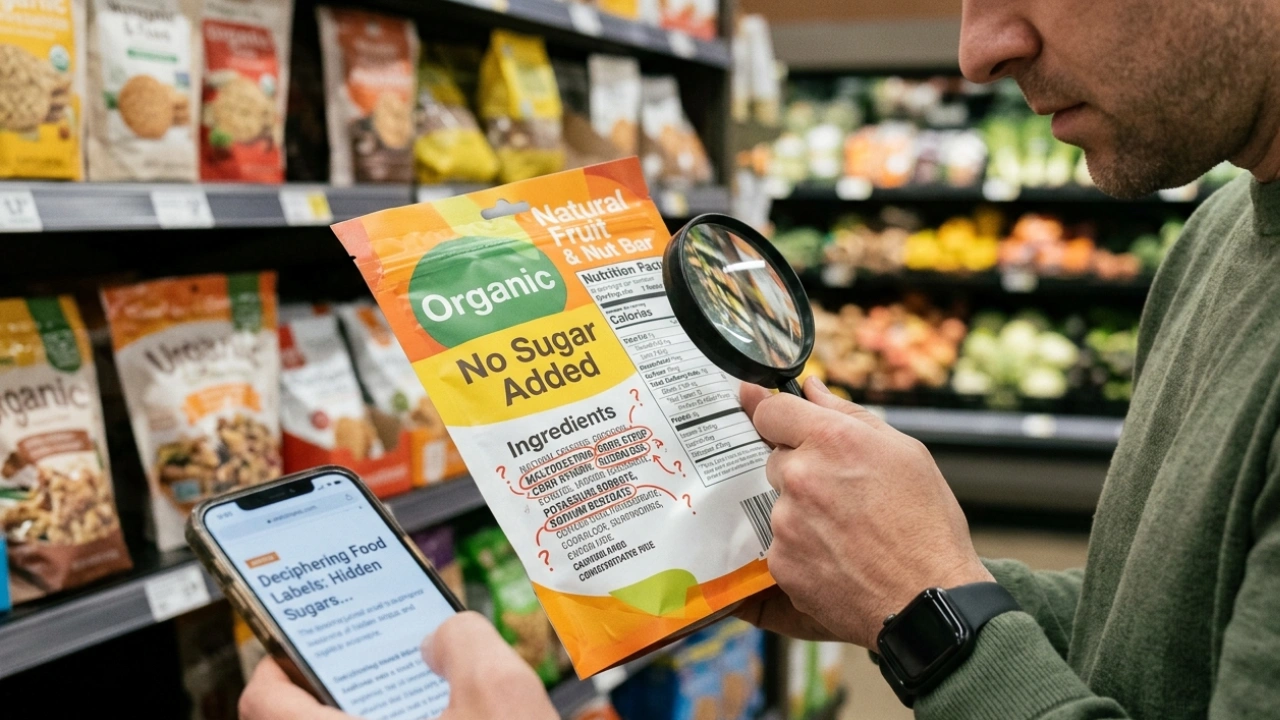
Deciphering Food Labels: Walk down the aisle of any modern supermarket today, and you will find yourself surrounded by brilliant marketing masterclasses. Cardboard boxes and plastic pouches scream at you with bold, reassuring health claims: “100% Natural,” “Zero Added Sugar,” “Made with Whole Grains,” “Immunity Boosting,” and “Heart-Healthy.” For the health-conscious consumer trying to make better dietary choices, these products seem like absolute lifesavers.
However, behind these attractive, green-certified front packages lies a completely different reality. The packaged food industry operates heavily on loopholes. A product that proudly claims to be “Low Fat” is often packed with massive amounts of sodium and artificial binders to compensate for the lost flavor. Another labeled “Diet Friendly” might be loaded with chemical sweeteners that disrupt your metabolic health.
If you genuinely want to take control of what goes into your body, you must stop looking at the front of the box. The real truth is printed on the back, hidden within the microscopic text of the Nutrition Facts Table and the Ingredients List.
In this comprehensive, eye-opening guide, we will break down the exact strategy to read food labels like a pro, expose the most common corporate labeling tricks, and teach you how to spot hidden sugars and toxic chemical preservatives instantly.
The Golden Rule: The Law of Descending Order
Before looking at chemical names, you must understand how the law mandates ingredients to be listed. Food safety authorities globally require manufacturers to list ingredients in descending order by weight.
This means that whatever ingredient weighs the most in that product goes first on the list, and whatever weighs the least goes last.
-
The Trap: If you buy a pack of “Healthy Oats Cookies” and the first three ingredients listed on the back are Refined Wheat Flour (Maida), Sugar, and Palm Oil, while Oats appears at number five, you aren’t eating a health cookie. You are eating a disguised junk biscuit that contains a tiny sprinkling of oats just for marketing purposes. Always audit the top three ingredients; they make up the absolute majority of what you are consuming.
Exposing the Alias: How Sugars Hide Under 50+ Names
The biggest battlefield on a food label is Sugar. With rising awareness around diabetes, obesity, and systemic inflammation, consumers actively avoid products that show high sugar content. To bypass this, food scientists use a clever trick called “Ingredient Splitting.”
Instead of adding 30 grams of standard white sugar (which would force it to be the number one ingredient on the list), they add 5 grams of six different types of sugars. This pushes sugar further down the list, making the product look healthier than it actually is.
To spot hidden sugars, you must look for its common chemical aliases. Sugar is often disguised under these three main categories:
1. The “-Ose” Words
Any scientific ingredient that ends with the letters “ose” is structurally a form of sugar. Watch out for:
-
Sucrose (standard table sugar)
-
Fructose (fruit-based concentrated sugar)
-
Glucose / Dextrose
-
Maltose
2. Heavy Concentrated Syrups
Syrups are liquid sugars that dissolve instantly into processing mixes, heavily multiplying the glycemic index of the food:
-
High-Fructose Corn Syrup (HFCS – highly linked to metabolic fatty liver issues)
-
Malt Extract / Barley Malt
-
Rice Syrup / Corn Syrup Solid
-
Agave Nectar / Maple Syrup (often marketed as “healthy,” but still pure sugar in your bloodstream)
3. Natural-Sounding Distractions
Processed foods often use terms that sound rustic or organic to trick your brain into letting its guard down:
-
Cane Juice / Evaporated Cane Juice
-
Fruit Juice Concentrate
-
Molasses
-
Honey / Date Sugar
Also read: Easy Meal Prep Guide for Busy Professionals
Spotting Dangerous Chemical Preservatives and Binders
Preservatives are essential for extending shelf life, allowing packages to sit in warehouses for months without spoiling. While some preservatives are benign, several industrial chemicals frequently used in budget packaged foods can severely irritate your digestive lining and affect cellular health over time. Here are the red-flag additives you should look out for:
1. Artificial Trans Fats (Hydrogenated Vegetable Oils)
If a label claims “0g Trans Fat” on the front but you see “Partially Hydrogenated Palm/Soybean Oil” in the ingredient list, the product contains trans fats. Law allows brands to claim zero trans fats if the amount per serving is under 0.5 grams. If you eat the whole box, you are consuming a highly inflammatory dose of artery-clogging fats.
2. High-Risk Preservatives: BHA and BHT
Butylated Hydroxyanisole (BHA) and Butylated Hydroytoluene (BHT) are chemical antioxidants added to vegetable oils and cereals to prevent them from turning rancid. Several health watchdogs flag them due to potential long-term endocrine and hormonal disruptions.
3. Sodium Nitrites and Nitrates
Commonly found in processed meats, ready-to-eat savory meals, and flavored chips. When exposed to high cooking heat, these compounds can convert into nitrosamines, which are heavy gut-irritants.
4. Flavor Enhancers: MSG and Disodium Inosinate
While Monosodium Glutamate (MSG) occurs naturally in things like tomatoes and cheese, artificial MSG (often hidden under terms like Hydrolyzed Vegetable Protein or Yeast Extract) is chemically engineered to over-stimulate your brain’s reward centers, making you physically crave the food and overeat.
The 3-Step Practical Supermarket Label Audit
The next time you grab a packet of food, execute this rapid 10-second check to protect your health:
-
Check the Serving Size: A bottle of cold coffee might state it contains “120 Calories per serving.” But look closely at the top: Servings per container: 3. If you drink the whole small bottle, you are actually consuming 360 calories, not 120.
-
Apply the 5-Ingredient Rule: Try to choose packaged foods that contain fewer than 5 to 7 ingredients. Whole, real foods don’t require an endless chemical paragraph of emulsifiers, stabilizers, and artificial colors.
-
Cross-Verify Total Carbohydrates vs Dietary Fiber: If a loaf of “Brown Bread” has 40 grams of total carbohydrates but only 1 gram of dietary fiber, it is made of colored white flour. Real whole grains will have a high fiber ratio (at least 3g to 5g of fiber per serving).
In Short: Becoming a Conscious Consumer
The ultimate defense against deceptive food marketing is literacy. By understanding that ingredients are listed by weight and learning to spot the various hidden aliases of sugar, you take the power away from corporate marketing departments and place it back into your own hands. Eat real, single-ingredient whole foods as much as possible, and when you do buy packages, always flip the box and read the back.
Learn how to read the back of food packages and spot toxic preservatives instantly. How To Read Food Labels: Spot Hidden Sugars & Preservativeshttps://t.co/LtFCR8X3ru#HealthyEating #FoodLabels #NutritionTips #CleanEating #Genxsoft
— genxsoft (@genxsoftinfo) June 9, 2026