Best Cool Places to Beat Summer Heat: 2026 Coolcation Guide
Escape summer heat waves with our ultimate guide to the best coolcation destinations. Explore Alaska, Svalbard, Banff, Kilimanjaro, and New Zealand.
When summer hits its peak across the globe, it brings far more than just bright skies and sunny pool days. For millions of travelers, high summer brings scorching urban temperatures, skyrocketing home electricity bills from relentless air conditioning, severe heat stress, and a desperate urge to flee concrete jungles. As global climate patterns continue to shift, elevated summer temperatures are no longer just an occasional inconvenience—they have transformed how we think about seasonal travel.
Choosing a summer getaway is no longer merely about luxury or lounging on a crowded beach; it has evolved into a strategic decision centered on personal health, mental well-being, atmospheric comfort, and sustainable travel choices.
Instead of enduring oppressive heat waves indoors, an increasing number of international sightseers are leaning into a defining global movement: the “coolcation.” This trend sees travelers deliberately bypassing traditional, sun-scorched hot spots in favor of naturally chilly, high-latitude, or high-altitude regions. Recent travel industry metrics indicate that search volume for cold-weather and high-elevation destinations during peak summer months has surged by over 35% compared to previous years. Travelers are discovering that crisp alpine air, glacier-fed breezes, and low-humidity environments offer far greater rejuvenation than crowded coastal resorts.
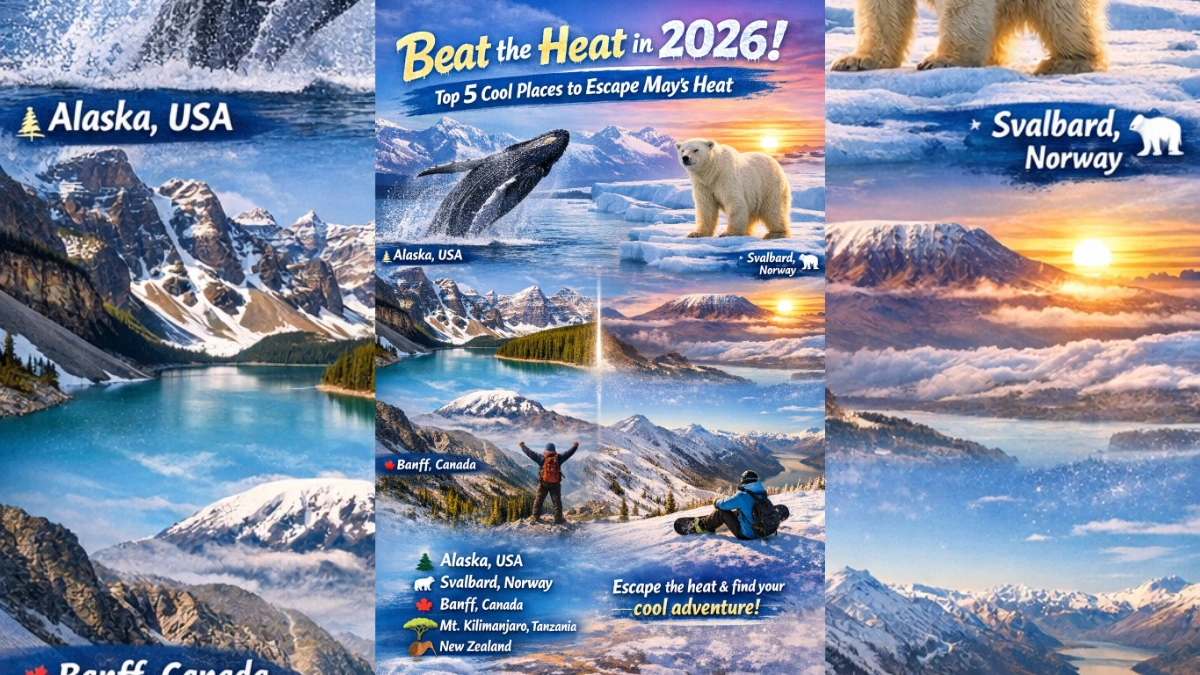
If you are looking to trade sweat and humidity for invigorating mountain winds and icy fjords, here is an exhaustive, deep-dive guide to the five best destinations that promise not only atmospheric relief, but also deeply transformative, world-class adventures.
1. Alaska: Nature’s Untamed Wilderness Escape
If your goal is to completely unplug from oppressive weather and urban noise, Alaska represents the absolute pinnacle of wild, open-air escapes. Covering over 660,000 square miles of untamed terrain, America’s largest state offers a scale of natural grandeur that instantly puts life into perspective.
The Climate & Seasonal Dynamics
Traveling during the shoulder season—particularly around May—presents a rare atmospheric sweet spot. The bitter, unrelenting cold of the Arctic winter has softened into mild, crisp conditions, with daily temperatures comfortably hovering between 5°C and 15°C (41°F to 59°F). Crucially, the overwhelming waves of peak-summer cruise ship tourists have not yet inundated the coastal ports. This window allows you to experience Alaska’s raw majesty in relative solitude.
Unmissable Adventures
-
Fjord Navigation and Kayaking: Paddle a sea kayak through the quiet, glass-like waters of Glacier Bay National Park or Kenai Fjords. Gliding past towering blue ice walls while listening to the thunderous crack of icebergs calving into the sea is an humbling sensory experience.
-
Marine Wildlife Encounters: Spring marks the return of vibrant marine life. Chartering a vessel out of Seward or Juneau offers front-row seats to humpback whales breaching, pods of orcas hunting, and sea otters floating lazily along kelp beds.
-
Exploring the Interior: The Alaska Railroad opens up dramatic transit routes through wilderness corridors inaccessible by car. Take the train toward Denali National Park to catch glimpses of North America’s tallest peak framed against snow-covered tundra.
Modern Strategic Value
In an era dominated by constant screen time, digital fatigue, and environmental burnout, Alaska provides a genuine mental reset. The extended daylight hours—where the sun lingers near the horizon late into the night—give you endless time to wander without feeling rushed. It is not just a vacation; it is a recalibration of your internal biological rhythm.
2. Svalbard, Norway: A High-Arctic Surreal Odyssey
Located midway between mainland Norway and the North Pole, the remote archipelago of Svalbard feels less like a standard holiday spot and more like an expedition to an alien world. It is one of the northernmost permanently inhabited places on Earth.
The Climate & The Midnight Sun
For travelers looking to escape summer heat, Svalbard delivers sub-zero refreshing reality. Temperatures during May range from -5°C to 5°C (23°F to 41°F). During this time, Svalbard enters the full glory of the Midnight Sun—a continuous, 24-hour cycle of unbroken daylight where the sun never dips below the horizon.
Unmissable Adventures
-
Wilderness Snowmobile and Catamaran Safaris: Traverse frozen fjords and snow-laden valleys on guided snowmobiles, or board hybrid-electric catamarans to silently glide alongside massive sea glaciers without disturbing the fragile marine ecosystem.
-
Arctic Wildlife Tracking: Svalbard is one of the few places on Earth where polar bears outnumber human residents. Guided wildlife expeditions give you the chance to spot these magnificent apex predators, alongside Arctic foxes in their pristine white coats, walruses hauled out on ice floes, and vast colonies of nesting seabirds.
-
Glacier Cave Exploration: Descend with specialized guides into deep meltwater channels carved beneath ancient glaciers, where frozen blue ice crystals form subterranean cathedrals.
Modern Strategic Value
Svalbard exposes travelers to the stark, fragile beauty of the polar realm. As Arctic ice melts at unprecedented rates, visiting this region responsibly fosters a deep, personal commitment to environmental conservation. It transforms passive tourists into passionate advocates for global climate action.
3. Banff National Park, Canada: Alpine Perfection in the Rockies
Nestled within the jagged contours of the Canadian Rockies in Alberta, Banff National Park is a destination that looks almost too pristine to be real. It combines majestic mountain topography with crystal-clear glacial waters and dense pine forests.
The Climate & Shoulder-Season Advantages
May brings a magnificent transformation to Banff. Daytime temperatures range from a comfortable 5°C to 18°C (41°F to 64°F), creating crisp, fresh conditions ideal for active outdoor pursuits. The air carries the sharp, clean scent of pine and melting snow, providing instant relief from high-humidity climates.
Unmissable Adventures
-
Iconic Glacial Lakes: Lake Louise and Moraine Lake begin to thaw in late spring, revealing their signature, vivid turquoise waters—a color produced by rock flour suspended in the glacial meltwater. Visiting in May allows you to stroll along these shores before the heavy summer tour buses arrive.
-
High-Altitude Hiking and Wildlife Spotting: As the lower-elevation trails clear of heavy ice, hikes up Johnston Canyon or Tunnel Mountain reward travelers with roaring waterfalls and sweeping valley views. Wildlife is particularly active in spring; keep your distance while spotting elk, bighorn sheep, and black bears foraging along valley floors.
-
Soaking in Natural Thermal Springs: After a day out in the crisp mountain air, unwind at the Banff Upper Hot Springs, enjoying warm, mineral-rich waters framed by snow-capped peaks.
Modern Strategic Value
Overtourism is straining major destinations worldwide. By visiting world-renowned natural parks like Banff during shoulder seasons, you actively help distribute tourist impact, support local eco-businesses year-round, and secure a far more peaceful, authentic connection with nature.
4. Mount Kilimanjaro, Tanzania: An Ascent Through Climate Zones
For those who believe that the best escape from heat is a physical challenge, Mount Kilimanjaro offers the ultimate adventure. Soaring 5,895 meters (19,341 feet) above the African plains, “The Roof of Africa” is the tallest free-standing mountain in the world.
The Climate & Thermal Elevation
Climbing Kilimanjaro is uniquely equivalent to walking from the Equator to the North Pole in a matter of days. As you ascend, you trek through five distinct ecological climate zones:
-
Cultivated / Agricultural Zone (Lower Slopes)
-
Lush Montane Rainforest (Humid & Green)
-
Heath & Moorland (Cool & Open)
-
Alpine Desert (Dry & Cold)
-
Arctic Summit Zone (Sub-zero Glaciers)
In May, as seasonal rains draw to a close, the mountain paths clear, offering crisp climbing conditions and quiet, uncrowded routes. Temperatures drop dramatically with every thousand meters of elevation gained, culminating in freezing summit conditions at Uhuru Peak (-7°C to -15°C / 19°F to 5°F).
Unmissable Adventures
-
Trekking the Lemosho or Machame Routes: These scenic trails take you through dense, moss-draped rainforests populated by black-and-white colobus monkeys before pushing above the cloud line into surreal, high-altitude alpine deserts.
-
Camping Above the Clouds: Sleeping in high-altitude mountain camps rewards trekkers with breathtaking views of sunset seas of clouds beneath them and brilliant, unpolluted views of the night sky.
-
Standing on the Crater Rim: Reaching Uhuru Peak at sunrise—surrounded by ancient, iridescent blue ice fields—delivers a profound sense of personal triumph that few life experiences can match.
Modern Strategic Value
Modern travel is shifting away from passive sightseeing toward experience-driven, transformative journeys. People are seeking meaningful stories over superficial photos. Scaling Kilimanjaro offers an unforgettable personal achievement that shifts your perspective on resilience and determination.
5. New Zealand (South Island): The Magic of Counter-Seasonal Travel
While the Northern Hemisphere swelters under the mid-year sun, the Southern Hemisphere swings into cool winter conditions. New Zealand—and particularly its dramatic South Island—becomes a haven for lovers of crisp weather, alpine sports, and jaw-dropping landscapes.
The Climate & Seasonal Appeal
May marks the beginning of the Southern Hemisphere’s winter season. Temperatures comfortably hover between 7°C and 15°C (45°F to 59°F) in lower valleys, dropping lower in mountain ranges. The seasonal transition brings dusting layers of snow to mountain peaks, cheaper accommodation rates, and empty highways perfect for road trips.
Unmissable Adventures
-
Queenstown & Wanaka Adventure Sports: Known as the adventure capital of the world, Queenstown transforms into a snowy paradise. Enjoy early-season skiing, snowboarding, or take scenic gondola rides up Bob’s Peak for panoramic views of Lake Wakatipu and The Remarkables mountain range.
-
Cruising Fiordland National Park: Board a quiet fjord cruise through Milford Sound or Doubtful Sound. In winter, towering sheer cliff faces are adorned with hundreds of temporary waterfalls cascading directly into dark, pristine waters.
-
Geothermal and Alpine Retreats: Travel up to Rotorua on the North Island for steaming geothermal geysers and hot springs, or relax in the alpine thermal pools of Hanmer Springs on the South Island.
Modern Strategic Value
Counter-seasonal travel is one of the smartest strategies in modern tourism. By flipping the calendar, you avoid the seasonal price hikes of traditional summer hubs, skip long queues, and enjoy pristine environments at their absolute best.
Comparing the Coolcation Escapes
To help you decide which escape fits your travel style best, here is a breakdown of what each destination offers:
| Destination | Average May Temp | Ideal Travel Style | Key Highlight |
| Alaska, USA | 5°C to 15°C | Nature Lovers & Cruisers | Glaciers, coastal fjords, and marine wildlife. |
| Svalbard, Norway | -5°C to 5°C | Polar Explorers & Thrill Seekers | 24-hour Midnight Sun and polar bear habitats. |
| Banff, Canada | 5°C to 18°C | Photographers & Hikers | Turquoise glacial lakes and snow-capped peaks. |
| Mt. Kilimanjaro | 15°C down to -15°C | Trekkers & Adventure Seekers | Journeying through 5 climate zones to glaciers. |
| New Zealand (South) | 7°C to 15°C | Road Trippers & Ski Enthusiasts | Counter-seasonal alpine scenery and adventure sports. |
The Bigger Picture: Why “Cool Travel” is the Future
Let’s be real: traditional summer travel is undergoing a massive shift. With intense heat waves regularly sweeping through southern Europe, mainland Asia, and North America, classic summer destinations are losing their appeal. Vacationing in 40°C+ (104°F+) heat can lead to exhaustion, limited daytime activities, and serious health risks like heatstroke and dehydration.
This is why choosing cooler destinations has evolved from a niche preference into an essential travel strategy.
The Benefits of Embracing “Coolcations”:
-
Enhanced Physical Comfort and Safety: Cold and mild climates significantly reduce health risks associated with extreme heat, allowing you to spend full days exploring outdoors without physical distress.
-
Unrestricted Active Exploration: Lower temperatures keep your energy levels high, making outdoor activities—from mountain trekking to city walking tours—invigorating rather than exhausting.
-
Protection for Fragile Ecosystems: Spreading tourism across cooler, off-peak regions relieves environmental strain on over-touristed, summer-stressed hotspots.
-
Superior Mental Renewal: Cold, crisp mountain and coastal air actively stimulates focus, improves sleep quality, and delivers true physical and mental relaxation.
Final Thoughts: Choosing Cooler Horizons
Escaping the heat isn’t about running away from summer—it’s about choosing a richer, more invigorating way to experience the world.
Whether you choose to stand before the colossal blue ice walls of Alaska, witness the surreal 24-hour sunlight of Svalbard, paddle across the quiet turquoise waters of Banff, tackle the high-altitude challenge of Kilimanjaro, or welcome the winter air in New Zealand—each of these destinations offers far more than low temperatures. They offer memories that stick with you for a lifetime.
When planning your next trip, don’t just ask, “Where is everyone going this summer?”
Ask yourself: “Where can I go to feel truly energized, healthy, and inspired?”
The answer lies waiting in cooler horizons.